
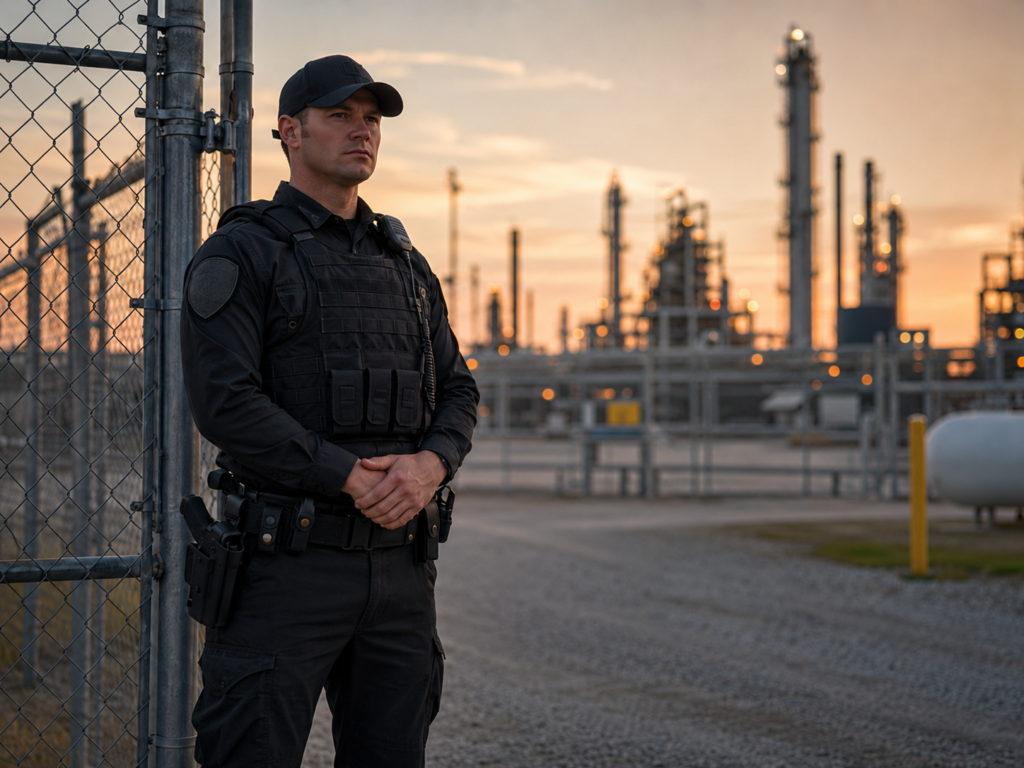
Oil, Gas, and Energy Security Guards in New Orleans, LA: Trusted Protection for Your Facilities, Personnel, and Critical Infrastructure
Oil, gas, and energy facilities in Southeast Louisiana operate in one of the most demanding security environments in the country. A single unguarded perimeter, an unverified contractor, or an unmanned site during the wrong shift window can trigger regulatory action, operational downtime, and liability that no retroactive response fully contains.
At NOLA Protection Group, we have been building security programs specifically for the energy sector across New Orleans, Baton Rouge, South Mississippi, and the Gulf Coast since 2012. We are a Louisiana-owned company led by veterans of the U.S. Coast Guard, the Army National Guard, and national security operations, professionals whose backgrounds reflect the discipline and vetting standards that critical infrastructure environments demand.
We are active members of ASIS International, InfraGard, and the Emergency Preparedness Task Force, and we serve facilities across the Greater New Orleans industrial corridor, the River Parishes, and the Gulf Coast. Every security plan we build is designed around your specific operation, not a template pulled from another industry.
Call us today to schedule your free 30-minute security assessment and take the first step toward a more secure operation.
Why Oil, Gas & Energy Security Needs a Specialized Approach
The energy sector operates under conditions that no other industry fully shares. Your facility runs around the clock, houses hazardous materials and high-value equipment, rotates contractors and vendors through your gates daily, and operates within a federal oversight framework that includes DHS, TSA, and OSHA requirements. The combination of those factors makes energy security a discipline of its own.
A general security approach designed for commercial properties does not account for the credentialing demands of a high-contractor-volume turnaround, the perimeter risks of a remote pipeline segment, or the regulatory consequences of a single unauthorized access event at a facility under CFATS oversight. Deploying the wrong security model at an energy site does not just leave gaps. It creates exposures that standard guard coverage was never built to address.
When you work with a trained, industry-certified security team, you protect your personnel, your assets, and your facility’s standing with the regulators, insurers, and communities that are watching your operation. A breach that generic security misses can trigger a DHS review, halt production, and generate liability that no amount of reactive response can walk back. Getting the security model right from the start is what prevents that outcome.
Signs Your Oil, Gas & Energy Facility Has a Security Gap Right Now
Knowing when your current security coverage is insufficient helps you act before an incident forces your hand. While some concerns can be addressed with minor upgrades, others indicate an immediate need for professional security deployment.
-
Unauthorized Access to a Restricted Area
If an unverified individual has entered a controlled zone, a processing area, a chemical storage location, or any restricted perimeter on your property without being stopped, that is not a procedural oversight. It is a CFATS compliance event and a liability exposure that your security posture failed to prevent. One unresolved access breach is enough to draw a formal review from regulators.
-
Equipment or Materials Theft
Theft of copper wiring, fuel, tools, and industrial equipment is one of the most consistent security threats facing energy facilities in Southeast Louisiana. Recurring theft of these items signals that your perimeter coverage and after-hours monitoring are not functioning as they should. Beyond the direct replacement cost, recurring theft drives up insurance premiums and signals to regulators that your site security plan is not being enforced.
-
Contractors and Vendors Entering Without Proper Verification
If subcontractors, delivery personnel, or third-party vendors are accessing your facility without having their credentials confirmed and logged by a trained security officer, your access control has already broken down. Unverified contractors are one of the leading sources of unauthorized access and internal theft at industrial sites. Your security layer should close that gap before anyone reaches your equipment.
-
No Monitored Coverage for Remote or Unmanned Sites
Pipeline segments, pumping stations, wellheads, and storage yards that operate without any form of regular patrol or remote monitoring are open targets. A site does not need to be staffed around the clock to be protected, but it does need a consistent security presence, whether through scheduled patrols, mobile camera coverage, or a combination of both. If your remote assets have neither, the exposure is significant.
-
No Updated Facility Security Plan
Every energy facility operating under DHS critical infrastructure designation or subject to CFATS requirements needs a written security plan that reflects its current layout, staffing, and threat environment. If your plan has not been reviewed since your last facility expansion, operational change, or personnel transition, it does not accurately describe the site it is supposed to protect.
-
Slow or Out-of-State Vendor Response
If your current security company’s management is based outside Louisiana, your response time suffers when it matters most. A national vendor routing your urgent call through a coordinator who has never set foot on your site or in your region cannot respond the way a locally operated team can. In a critical infrastructure emergency, that difference is not minor.
-
No Overnight or Remote Shift Coverage
Your facility’s highest-risk window for unauthorized access, equipment theft, and perimeter breaches is during overnight shifts, weekends, and periods when your regular workforce is off-site. If those windows are unmonitored, every hour they stay that way is an unnecessary and preventable exposure.
If you are unsure whether your current coverage is sufficient, a professional security assessment can help you identify the gaps and make an informed decision.
Benefits of Hiring a Professional Oil, Gas & Energy Security Team in New Orleans
Proactive security coverage built specifically for energy facilities delivers measurable results for your personnel, your assets, and your operational continuity. With professional security in place, you will experience:
- Reliable around-the-clock protection for your personnel, equipment, and facility perimeter
- Fewer access control failures through trained gate management, credentialing, and contractor verification
- Compliance documentation that supports CFATS requirements, TSA Pipeline Security Guidelines, and DHS critical infrastructure obligations
- Faster incident response because officers are already on-site, reducing your liability exposure and operational downtime
- Improved workforce confidence because your employees and contractors feel secure working overnight shifts and at remote locations
- Lower long-term costs because proactive security prevents the equipment theft, regulatory penalties, and liability claims that reactive security cannot recover from
Investing in professional energy security protects your most important asset: your people. It also gives your leadership, your insurers, and the regulatory agencies overseeing your operation confidence that your facility takes security seriously.
Our Oil, Gas & Energy Security Services in New Orleans
Armed and Unarmed Security Guards
Your facility’s risk profile and operational requirements determine the right coverage mix. Unarmed officers are appropriate for gate management, administrative areas, and lower-risk perimeter zones where professional deterrence and access control are the priority. Armed officers are deployed at high-value asset areas, chemical storage zones, processing facilities, and any site where the threat level requires a stronger layer of protection. Every one of our officers, armed or unarmed, completes an industry-specific orientation before their first shift and holds current CPR, first aid, and AED certification.
Gate Access and Contractor Credentialing
Your facility entrance is the most important security checkpoint on your property. Our officers manage incoming vehicle and personnel flow, verify contractor and vendor credentials, enforce your site access policies, and maintain an accurate log of everyone entering and exiting. This single function, when handled by a trained officer rather than an unstaffed gate or an honor system, closes more access control gaps than any other security measure you can deploy.
Perimeter and Facility Patrols
Visible officer patrols along your fenceline, storage yards, pipeline right-of-way access points, and equipment areas deter theft and unauthorized access before they occur and reduce response time when something does happen. Our patrol officers conduct both scheduled and randomized sweeps so your coverage is never predictable to someone mapping your site for a future breach.
Remote and Unmanned Site Security
Pipeline segments, pumping stations, tank farms, and wellhead locations that operate without on-site staffing require a different approach than a staffed facility. We provide scheduled mobile patrol services for remote energy assets across Southeast Louisiana, giving your unattended sites a regular, documented security presence that deters opportunistic theft and flags any access or perimeter anomalies before they become incidents.
Contractor and Vendor Management
Large turnarounds, maintenance windows, and capital projects bring dozens or hundreds of contractors onto your property in a short period. Managing that volume of unfamiliar personnel requires a dedicated security presence at your access points and within your facility. Our officers enforce your contractor badging protocols, monitor work zones, and ensure that no individual is on your property beyond their authorized scope or hours.
LVT Mobile Camera Towers
For remote sites, temporary work areas, and perimeter zones where sustained officer patrols are not practical, LVT Mobile Camera Towers provide continuous live monitoring with real-time alerts, deterrence lighting, and a built-in PA system. Each tower deploys within 24 to 48 hours and requires no infrastructure installation. Deployed at vulnerable perimeter points and storage areas, these towers add a visible deterrent and a continuous monitoring layer at locations where sustained officer patrols are not practical.
CEIA OPENGATE Weapons Screening
For facilities where the risk of a weapon being brought onto your property is elevated, including high-traffic contractor entry points, large turnaround events, and any site with documented threat activity, CEIA OPENGATE provides automatic weapons screening without creating the delays that frustrate contractors and slow your operations. This is the same screening system deployed at government facilities and major industrial events.
Emergency and Hurricane Response
At NOLA Protection Group, we have managed security continuity during Southeast Louisiana hurricanes since 2012. We provide planning before a storm arrives, deployment during evacuations and facility shutdowns, asset protection for unoccupied sites during the storm period, and security during post-storm reentry to prevent looting and unauthorized access to damaged equipment. For energy facilities, that continuity is not optional. We review your emergency security protocol as part of the free assessment and identify any gaps before the next storm season begins.
How It Works in 3 Simple Steps
Step 1: Schedule Your Free 30-Minute Security Assessment
Call 504-577-2323 or fill out the contact form. We respond within 2 business hours. During the assessment, we review your facility layout, identify your specific vulnerabilities, and walk you through staffing and technology options. There is no obligation and no sales pressure. Just a clear picture of where your security stands today.
Step 2: Receive Your Tailored Security Plan
We build a security program around your facility type, operational footprint, staffing hours, and risk profile. Not a generic template. You will receive a detailed written plan that includes guard deployment, patrol schedules, technology recommendations, and a transparent pricing estimate before any agreement is signed.
Step 3: We Deploy, and You Get Back to Running Your Operation
Standard engagements are active within 48 to 72 hours of contract signing. For urgent situations such as a recent staff assault, an active compliance gap, or an approaching hurricane, call us directly, and we will assess same-day deployment options. Once your security is in place, our Louisiana-based management team stays available around the clock for anything that comes up.
Why New Orleans Energy Facilities Choose NOLA Protection Group
- Industry-Specific Officer Training: Every officer completes an orientation covering critical infrastructure awareness, hazardous environment protocols, contractor and vendor credentialing procedures, access control standards for energy facilities, and emergency response coordination before their first shift. You will never have an officer on your property learning on the job.
- CPR, First Aid, and AED Certified: Every one of our officers holds current CPR, first aid, and AED certification. In an industrial environment where medical emergencies can happen far from the nearest responder, your security team needs to be a first line of support, not just a deterrent.
- Around-the-Clock Emergency Response: Energy facility security incidents do not follow business hours. Our Louisiana-based management team is available around the clock for urgent deployments, after-hours calls, and emergencies throughout Southeast Louisiana. When you call, you reach someone local who knows your site and your region, not a national call center.
- Transparent Pricing: No surprises and no hidden fees. We provide a detailed written estimate before any work begins and always explain your options clearly.
- Louisiana Licensed and Fully Insured: We are fully licensed with the Louisiana State Board of Private Security Examiners (LSBPSE), and every officer carries individual state licensure. We carry liability coverage that meets the documentation requirements of energy sector procurement departments, facility operators, and most industrial insurance carriers.
- Advanced Security Technology: From LVT Mobile Camera Towers for remote site monitoring to CEIA OPENGATE weapons screening for high-traffic entry points, we deploy the same technology used at major government and industrial facilities. If your operation needs more than officer presence alone, we have the technology to close that gap.
- Local Expertise Since 2012: We have served New Orleans and Southeast Louisiana industrial and energy operations for over a decade. Our management team lives here, understands the Louisiana energy landscape, knows the corridors and communities your facilities operate in, and responds personally when you call.
Your Operation Is Too Critical to Leave a Security Gap Unaddressed
Do not wait for a breach, a theft, or a regulatory review to force you to address a security gap at your energy facility. At NOLA Protection Group, we have served Southeast Louisiana oil, gas, and energy operations since 2012. We understand the stakes, the regulations, and the urgency.
Call 504-577-2323 to schedule your free 30-minute facility security assessment. We respond within 2 business hours and can deploy a standard engagement within 48 to 72 hours of contract signing.
Frequently Asked Questions About Oil, Gas & Energy Security Guards in New Orleans, LA
What regulations apply to oil and gas facility security in Louisiana?
Energy facilities in Louisiana operate under a layered framework depending on their type. Chemical and petrochemical facilities storing threshold quantities of certain chemicals fall under DHS Chemical Facility Anti-Terrorism Standards (CFATS). Pipeline operators follow TSA Pipeline Security Guidelines. Waterway and port-adjacent facilities operate under MARSEC requirements. All facilities designated as critical infrastructure by DHS are expected to maintain a documented facility security plan.
What is the difference between a plant security officer and a general security guard?
A plant security officer is trained specifically for industrial environments and understands access control requirements, hazardous material awareness, and emergency response protocols that energy facilities demand. A general security guard is trained for commercial or retail deterrence, which does not translate to the demands of a refinery, pipeline terminal, or chemical processing facility.
How do energy facilities manage security during large contractor turnarounds?
Large turnarounds bring dozens or hundreds of unfamiliar contractors onto a facility in a short window. Effective security during that period requires dedicated officers at access points enforcing badging protocols, monitoring work zones, and ensuring no individual is on property beyond their authorized scope or hours. Without a dedicated security presence, contractor-volume events are one of the highest-risk periods a facility faces.
How is perimeter security handled at remote pipeline and well sites?
Remote sites that cannot be staffed around the clock are typically protected through scheduled mobile patrols, LVT Mobile Camera Towers with live remote monitoring, and documented access logs. The goal is a consistent, visible security presence that deters opportunistic theft and flags perimeter anomalies before they become incidents.
How quickly can NOLA Protection Group deploy to an energy facility in New Orleans?
Standard deployments are active within 48 to 72 hours of contract signing. For urgent situations including a recent perimeter breach, a compliance gap, or an upcoming turnaround event, call 504-577-2323 directly and we will assess same-day or next-day options.
Does NOLA Protection Group serve both onshore facilities and Gulf Coast operations?
Yes. We serve onshore energy facilities across Southeast Louisiana including refineries, chemical plants, pipeline terminals, pumping stations, and storage yards. For Gulf Coast operations, our services extend to shore-based security for vessel staging areas, heliport access control, and perimeter coverage at dock and port facilities.
What makes NOLA Protection Group different from national security companies serving Louisiana energy facilities?
We have been headquartered in Southeast Louisiana since 2012. Our leadership includes veterans of the U.S. Coast Guard and Army National Guard with direct experience in critical infrastructure protection in this region. Every officer completes an industry-specific orientation before their first shift, and our management team responds personally when you call, not through a national routing center that has never seen your facility.
How does NOLA Protection Group handle energy facility security during hurricane season?
We have supported security continuity at Southeast Louisiana energy facilities through every major storm season since 2012, covering pre-storm planning, shutdown and evacuation security, asset protection during the storm period, and controlled reentry when operations resume. For energy facilities where an unprotected shutdown creates safety and compliance risks, this planning is part of every client relationship from day one.


